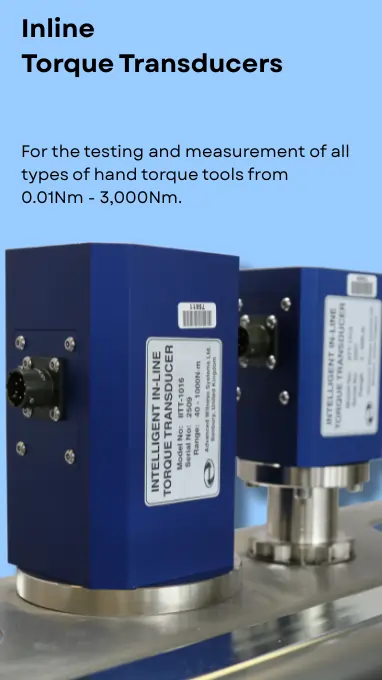
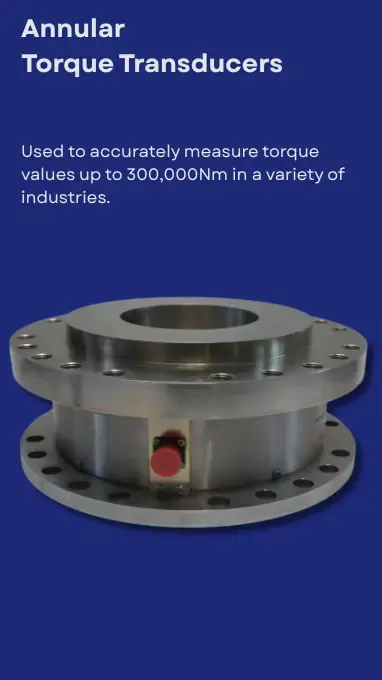
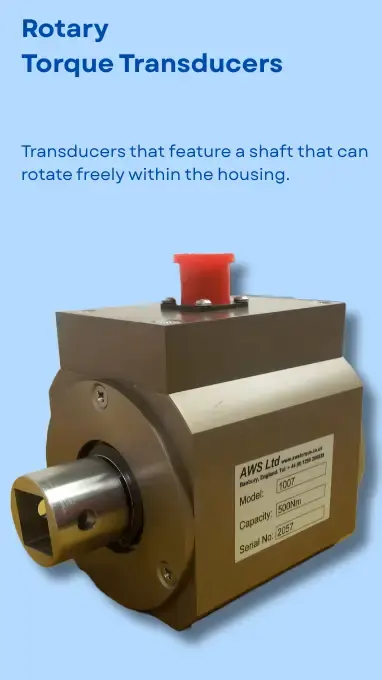
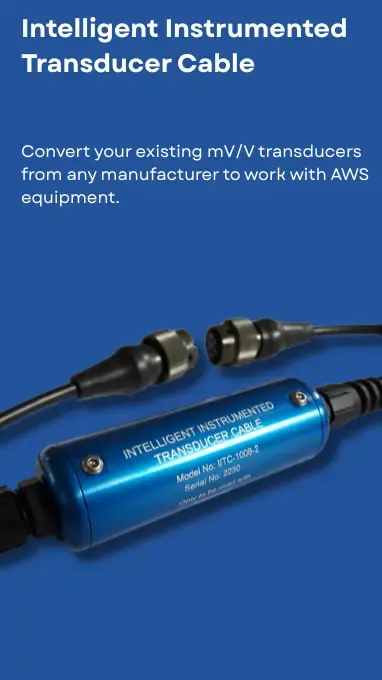

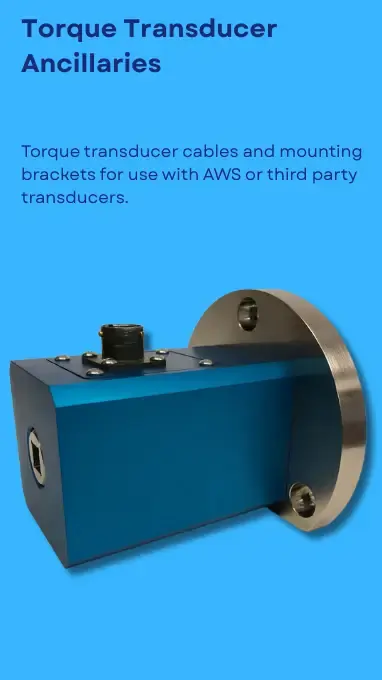
A torque transducer, also known as a torque sensor, is a device used to accurately measure the amount of torque being applied. There are different types of torque transducers such as Inline, Annular and Rotary, each specifically tailored to different uses.
A torque tester, also known as a torque analyser, is a package of a torque transducer and an inbuilt display, to be used for accurately measuring applied torque. For more information on torque testers, view our range.
This really depends on your requirement, as to what torque range you are measuring and whether you are measuring stationary or rotational torque. The most popular type of torque transducer is the Inline torque transducer, used to measure stationary torque up to 3,000Nm. For higher stationary torque requirements, the Annular torque transducers will cover a range from 3.5 – 300kNm. For rotational torque, rotary torque transducers are used due to their rotating shafts, or annular reaction transducers.
If you’re looking for a display to read the values your torque transducer is outputting, our torque tester range is a combined package for the measurement and display of torque readings. For more information on torque testers, view our range.
The advantages of strain gauged torque transducers are they use a very well tried and much proven technology with infinite resolution. They are also less prone to failure than other types of transducer due to their simplicity and robustness. Strain gauged torque transducers including AWS products, that use a full wheatstone bridge configuration, are usually wired in such a way that they can only read torque, minimising bending, tension or compression. They are also very temperature stable when using compensated gauges for the strain material. Strain gauged torque transducers are usually highly accurate with long term stability.
All AWS torque transducers feature accuracy better than 0.1% of the reading from 10% to 100% of the nominal torque. A traceable calibration certificate will be issued with the torque transducer, with the option of upgrading to a UKAS accredited calibration if required.
Accuracy is important for torque transducers, for reducing errors of your readings, but also to reduce Stated Measuring Device Error (bep) and Stated Expanded Measuring Device Uncertainty (Wmd) in calibration procedures.
Being an independent company, our torque transducers can be easily calibrated by any accredited calibration laboratory wherever they are in the world, allowing you to save time and cost by using local calibration services with short lead times.







